

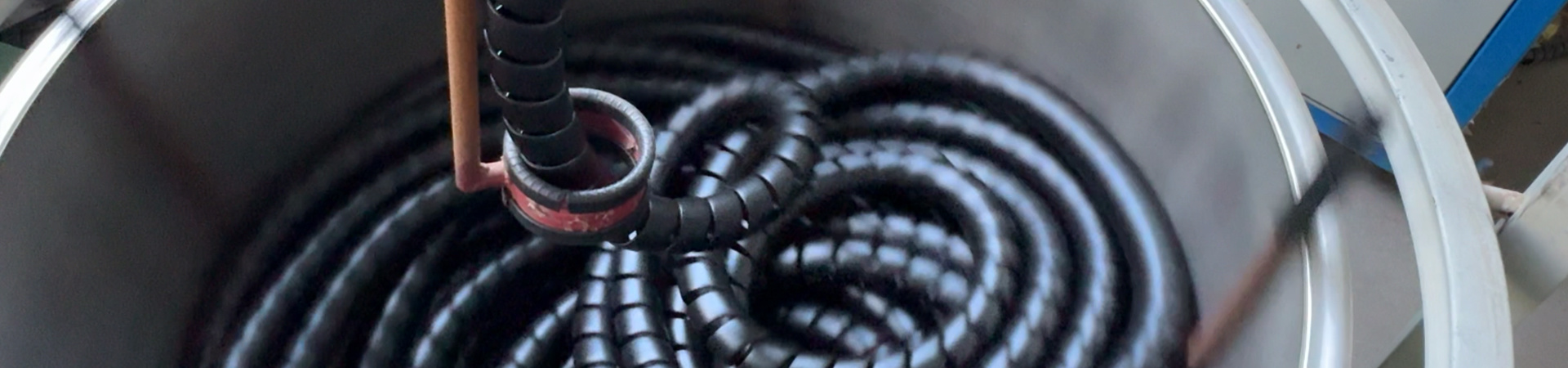
What are the functional characteristics of foam sealing strips?
Dec 10,2024
1. The foam sealing strip has good sealing function, high temperature resistance, weather resistance, aging resistance, impact resistance, shockproof and waterproof, and can fit various smooth surface materials.
2. It can be self-adhesive with backing, providing better sealing, high temperature adhesive for long-lasting use without falling off. Environmentally friendly, good insulation, high temperature resistance, small compression deformation, strong resilience, and non-toxic.
3. Heat resistance: Silicone rubber has much better heat resistance than ordinary rubber, can be used at 150 degrees without performance change; can be continuously used at 200 degrees for 10,000 hours; can also be used for a period of time at 350 degrees.
4. Weather resistance: Ordinary rubber degrades rapidly under the effect of ozone generated by corona discharge, while silicone rubber is not affected by ozone. Its physical properties only change slightly after long-term exposure to ultraviolet light and other weather conditions.
What are the types of molding processes for foam sealing strip products?
1. Extrusion molding process
Just like squeezing toothpaste, the extruder head is also the cross-sectional shape of the product, with a certain length. Under the effect of force and temperature, the product that comes out of the head has already been vulcanized and formed. Products formed by this process are generally strip-shaped, and the cross-section can vary. For example, rectangular strips, ring-shaped silicone tubes, etc.
2. Dripping glue process
Silicone material is in liquid form, placed in a syringe, and dripped onto the mold using pneumatic and manual operation, then heated and vulcanized to form. This process is manual and requires a lot of human involvement, so the production capacity is not high. It has a characteristic that a product can be dripped with multiple colors as required. Therefore, this process is often used for making crafts, such as multi-colored silicone wristbands, silicone phone cases with various colored patterns, etc.
3. Solid hot pressing molding process
This process uses the temperature and pressure of an oil press machine, relying on molds to vulcanize and form the product. This process has relatively low costs, high output, and is widely used. It is mostly used for single-color silicone products. It can also be used for two-color dual-hardness products or multi-color multi-hardness, but the structure of the product is not flexible and is limited. It can also be used for plastic and metal packaging, which is also not flexible in structure, and has temperature requirements for the packaged items, generally requiring the packaged items to withstand 180 degrees Celsius without deformation.
4. Liquid injection molding process
This process requires equipment such as silicone injection machines and material presses. Its material is water-thick, divided into two components A and B. The principle is: using the material press to mix components A and B in a 1:1 ratio into the injection machine's barrel, and then inject it into the hot mold cavity through the nozzle. This molding process has a relatively low temperature requirement, can be done at 130 degrees. It can be used for plastic encapsulation that is not very heat resistant, which is an advantage over solid hot pressing molding. It has high output and is easy to automate production. However, the cost of the material is several times higher than that of solid silicone material.

The company specializes in producing EPDM rubber sealing strips, EPDM sponge foam rubber strips, rubber and plastic sealing strips, PVC sealing strips, high temperature resistant silica gel strips, flame retardant sealing strips, dense-sponge-steel core three-composite, four-composite sealing strips, soft plastic-hard plastic composite strips, PVC/CPVC/ABS/TPE material extrusion composite strips and other products.
Company Address
Address: No.2-B, No.1 Branch Road, Dongtai Village, Wang Wenzhuang Town, Xiqing District, Tianjin
Address: Xiaotun Industrial Zone, Qinghe County, Hebei Province
Copyright©2024 Tianjin Hongchang Rubber & Plastic ProductsSEO